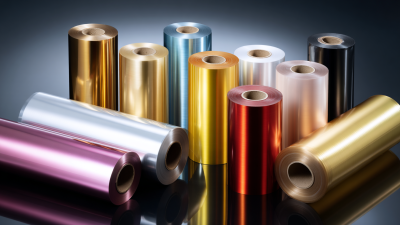
Holographic Coated Aluminum Laminate combines reflective aluminum, optical patterns, and protective polymer layers. It can make a pouch, label, or carton appear brighter under retail lighting. However, visual impact alone does not prove quality. Buyers must examine barrier performance, coating adhesion, print compatibility, recyclability, and supply consistency.
Smithers’ Future of Global Packaging to 2028 highlights lightweighting, premium presentation, and sustainability as major packaging priorities. Its findings suggest that converters must balance appearance with material efficiency and end-of-life requirements. The European Aluminium Foil Association also explains aluminum foil’s role in flexible packaging, especially its protection against light, oxygen, moisture, and aroma transfer. These properties matter when selecting laminate for sensitive products.
Details matter.
Guido Aufdemkamp, an aluminum packaging specialist and former EAFA executive director, has stated, “Aluminium foil is a permanent material.” That principle supports careful sourcing, because aluminum value can remain significant when recovery systems accept the final structure. Still, not every holographic laminate is easily recyclable. That assumption is often wrong.
This guide introduces seven practical buying tips for Holographic Coated Aluminum Laminate. It considers coating uniformity, holographic clarity, foil gauge, bond strength, barrier testing, compliance documentation, and supplier reliability. Buyers should request technical data sheets, migration reports, sample rolls, and test results under real converting conditions. A laminate that looks flawless on a sample may wrinkle during pouch forming or lose brilliance after flexing. The best decision combines measurable performance, transparent documentation, and honest evaluation of the intended market.
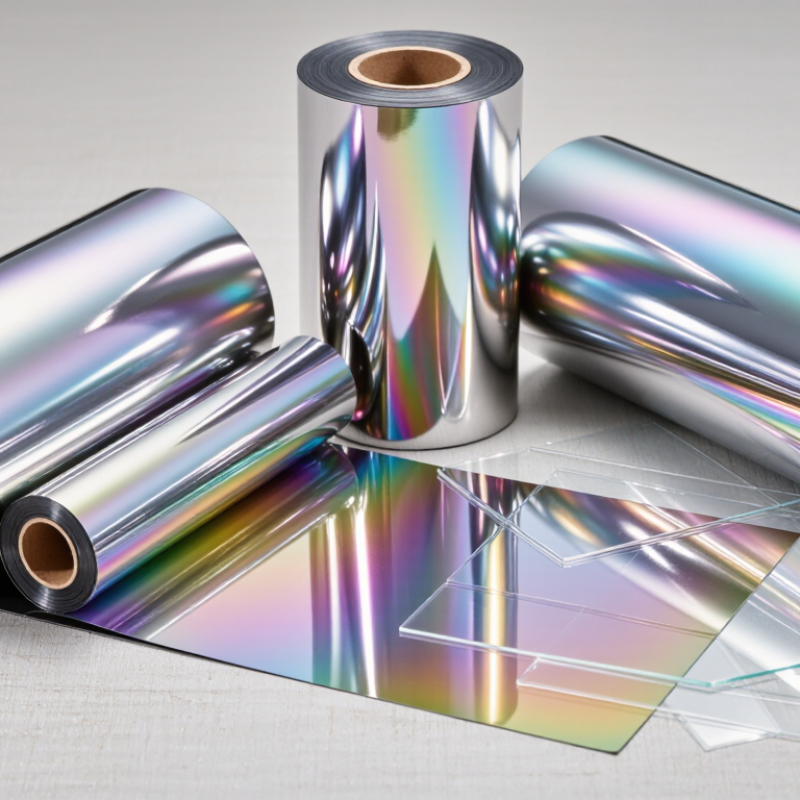
Understanding holographic coated aluminum laminate starts with its structure. It usually combines aluminum foil, polymer layers, adhesive, and a holographic coating. Each layer affects barrier performance, appearance, and sealing. Smithers’ 2024 flexible packaging outlook estimates the global market will exceed US$300 billion annually by 2029. Demand is growing, but not every laminate suits every product. A bright finish is not protection.
Check foil thickness, oxygen transmission rate, moisture transmission rate, and light-blocking performance. Ask for test results under your actual storage conditions. Heat-seal strength also matters, especially around sharp corners and folded edges. Test it first.
In production trials, weak adhesive bonding may appear only after humidity exposure. That delay can ruin an otherwise attractive package.
Review the holographic pattern carefully under real lighting. Fine graphics can disappear after printing, slitting, or pouch forming. Confirm whether the coating tolerates ink, heat, friction, and migration testing. The laminate should also match your filling equipment and sealing temperature. CEFLEX guidance warns that multi-material structures may complicate recycling, so request clear end-of-life information. Be cautious with vague claims such as “eco-friendly” or “fully recyclable.” I would also compare samples after aging, not just fresh samples. This step is easy to skip, and that is where my earlier buying assumptions proved incomplete. Reliable suppliers should provide technical data sheets, batch consistency records, and independent test evidence.
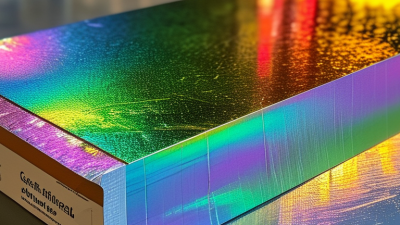
Buying holographic coated aluminum laminate requires more than admiring its reflective appearance. A smooth rainbow effect should remain even under angled light, without pinholes, cloudy patches, or uneven color. Run a cross-hatch adhesion test using ASTM D3359 methods. The coating should resist peeling after tape removal. Check the laminate edge too; poor bonding often appears there first.
Durability Durability needs measurable evidence. Ask for abrasion results based on ASTM D4060 and seal-strength data from ASTM F88 testing. A glossy surface can still fail after rubbing, folding, or heat exposure. According to Smithers’ 2024 flexible packaging outlook, the global market is projected to grow at about 4.1% annually through 2029. That growth increases pressure for thinner materials, but reduced thickness may weaken puncture resistance. Do not accept downgauging claims without test values.
Protection Protection depends on the full structure, not the holographic layer alone. Request oxygen and water-vapor transmission results, preferably tested under defined humidity and temperature conditions. The International Aluminium Institute reports that aluminum recycling can save up to 95% of the energy required for primary production, but multilayer separation remains a practical challenge. I would also inspect samples after bending, sunlight exposure, and simulated transport. Small failures matter. One overlooked crease can become a visible crack, and laboratory results may not reflect rough warehouse handling.
7 Tips for Buying Holographic Coated Aluminum Laminate
Choosing the Right Laminate Structure and Thickness
Structure comes before shine. A holographic aluminum laminate may use PET, aluminum foil, adhesive, and a sealant layer. Match each layer to the product’s moisture, oxygen, light, and heat exposure. A dry snack needs different protection from a liquid, oily, or acidic filling. Thicker is not always safer. It can increase stiffness, sealing problems, material cost, and waste.
Check foil thickness, total gauge, coating weight, and adhesive coverage separately. Common trial ranges include 7–12 microns for aluminum foil and 70–120 microns for total laminate thickness. These are starting points, not universal answers. Request production samples, not only laboratory swatches. Measure water vapor transmission and oxygen transmission using ASTM F1249 and ASTM D3985. Confirm seal strength with ASTM F88. I have seen attractive samples fail after repeated flexing.
Smithers’ 2024 flexible-packaging outlook identifies lightweighting and downgauging as major industry priorities. The Flexible Packaging Association reported approximately US$39.8 billion in U.S. flexible-packaging sales in 2022. These figures support careful material reduction, but weak downgauging can damage performance. Review pinholes, curl, delamination, haze, and holographic registration. Confirm whether the sealant remains stable during filling and heat sealing. Ask for aging data at realistic temperature and humidity. One missed test can become a costly complaint.
7 Tips for Buying Holographic Coated Aluminum Laminate
Checking customization, printing, and application compatibility matters more than surface shine. Grand View Research valued the global flexible packaging market at about USD 299.5 billion in 2022, with continued growth expected through 2030. This expansion increases material choices, but not every laminate suits every package. Ask for the aluminum thickness, coating structure, roll width, core size, and tolerance range. Request production samples, not only glossy swatches. A small sample can reveal curl, weak sealing, or uneven holographic effects.
Tip 1: Confirm the printing process. Test ink adhesion after lamination, curing, and abrasion. Flexographic, gravure, and digital systems may require different primers. Tip 2: Check artwork limits. Fine text can disappear across reflective patterns. Metallic opacity also changes color balance. Tip 3: Match the laminate with the final application. Consider heat-seal temperature, pouch forming speed, barrier needs, and storage humidity. The Flexible Packaging Association highlights barrier performance as a key factor in protecting packaged products. That sounds obvious, yet buyers sometimes approve appearance before testing performance.
Tip 4: Request migration and compliance documentation for the intended market. Tip 5: Compare total yield, not price per kilogram. Higher waste can erase a cheap quotation. Tip 6: Run a short pilot batch on the actual machine. I would not skip this. Tip 7: Record defects with photos and measurable limits. One overlooked issue remains: holographic coatings may affect sensors or registration marks. Discuss this with the converter before approving the purchase.
7 Tips for Buying Holographic Coated Aluminum Laminate
Tip 1: Compare suppliers through samples, not photographs. Ask for identical sizes, coating thickness, surface finish, and adhesive details. I check holographic clarity under warm and cool lighting. Small scratches can disappear online.
Tip 2: Request recent technical data sheets and batch test reports. Review aluminum thickness, coating adhesion, tensile strength, and color consistency. Certifications such as ISO 9001, RoHS, or REACH may support quality claims, but verify their scope and validity. A certificate alone proves little. Ask who issued it and when.
Tip 3: Calculate the complete cost. Include material price, tooling, sample charges, packaging, freight, insurance, taxes, and possible inspection fees. A low quotation may exclude important items. I once focused too heavily on unit price and underestimated delivery expenses. That mistake still influences my supplier comparisons.
Tip 4: Clarify delivery terms in writing. Confirm whether the price is EXW, FOB, CIF, or another agreed term. Check production time, minimum order quantity, loading port, and replacement rules for defective rolls. Request a realistic schedule with milestones. Fast promises can hide weak capacity.
Tip 5: Test before ordering heavily. Examine peel strength, folding performance, humidity resistance, and print compatibility. Keep signed samples for future comparison. Also ask how rejected batches are handled. Suppliers should answer clearly, even when the answer is inconvenient. Reliability shows in details.
| Tip | What to Compare | Practical Specification or Benchmark | Indicative Cost Range* | Documents to Request | Delivery and Risk Check |
|---|---|---|---|---|---|
| 1. Define the laminate construction | Aluminum thickness, core material, holographic coating, adhesive, and total thickness | Common commercial constructions use aluminum foil around 0.018–0.050 mm, with total laminate thickness often approximately 0.10–0.30 mm. Confirm whether the holographic effect is embossed, cast, transfer-coated, or printed. | Ask for separate pricing at 500 kg, 1,000 kg, and 5,000 kg volumes. Small custom orders generally carry higher conversion and tooling charges. | Technical data sheet, construction drawing, tolerance chart, coating description, and sample approval record | Verify roll width, roll diameter, core diameter, maximum roll weight, splice policy, and packaging method before issuing a purchase order. |
| 2. Compare suppliers by process capability | Coating uniformity, holographic registration, converting equipment, and quality-control capacity | Require agreed tolerances for basis weight, thickness, gloss, color difference, coating adhesion, coefficient of friction, and holographic pattern alignment. | Obtain a sample-roll or pilot-run quotation. A custom holographic pattern may require a one-time cylinder, shim, plate, or tooling charge. | Equipment list, inspection plan, calibration records, sample test report, and corrective-action procedure | Ask for the normal production capacity per month and the number of production days required after artwork and specification approval. |
| 3. Evaluate the full landed cost | Material price, coating and embossing, slitting, tooling, testing, freight, insurance, duty, and waste | Compare quotations on the same basis: currency, square metres or kilograms, minimum order quantity, usable yield, packaging, and payment terms. | For budgeting only, specialty coated aluminum laminates can vary widely—often from approximately USD 3–12 per m²—depending on construction, volume, pattern complexity, and region. Treat this as an RFQ planning range, not a market quote. | Formal quotation, cost breakdown, tooling quotation, freight estimate, and applicable tax or duty information | Calculate landed cost using the same Incoterm and destination. Confirm who pays for port charges, customs clearance, demurrage, and cargo insurance. |
| 4. Verify certifications and regulatory suitability | Quality management, chemical compliance, food-contact suitability, and end-use requirements | ISO 9001 certification supports quality-system control. REACH and RoHS documentation may be relevant for chemical and restricted-substance screening. Food-contact compliance must be confirmed for the exact laminate and adhesive system. | Budget separately for migration testing, heavy-metal screening, or other third-party tests when the application requires them. | Current certificates, declarations of conformity, safety data sheets, test reports, and material composition statement | Check certificate scope, issuing body, expiry date, product coverage, and whether the document applies to the supplied coating and adhesive—not only to the factory. |
| 5. Test performance before mass production | Bond strength, heat resistance, printability, flex-crack resistance, abrasion resistance, and barrier performance | Use application-specific acceptance limits. Typical validation may include coating adhesion, laminate bond strength, rub resistance, aging, humidity exposure, and seal-jaw compatibility. | Sample and laboratory costs depend on the number of tests, test method, laboratory location, and whether a pilot production run is required. | Certificate of analysis, test method references, retained sample policy, and pilot-run inspection report | Approve a signed golden sample and define the procedure for handling nonconforming rolls, claims, replacement, and credit notes. |
| 6. Compare Incoterms and lead times | EXW, FCA, FOB, CIF, DAP or other agreed delivery terms; production and transit time | For a standard repeat order, production commonly requires approximately 15–35 working days after approval; custom patterns, tooling, or raw-material shortages can extend the schedule. | Request freight quotes for sea, air, and courier options separately. Freight rates change by route, season, volume, and cargo classification. | Pro forma invoice, packing list, commercial invoice, certificate of origin where required, and agreed shipping documents | Separate the promised production date from the estimated transit date. Confirm shipment milestone notifications and a contingency plan for delays. |
| 7. Negotiate commercial protection | MOQ, payment terms, price validity, forecast flexibility, warranty, and claim settlement | Use a written specification with measurable tolerances, inspection timing, allowable splice quantity, roll-length tolerance, shelf-life requirements, and storage conditions. | Compare total annual spend rather than unit price alone. A slightly higher price may reduce waste, testing failures, emergency freight, and production downtime. | Purchase contract, quality agreement, inspection clause, warranty terms, approved sample, and change-notification procedure | Agree the inspection window, evidence required for a claim, response time, replacement or refund terms, and notification period for changes in raw materials or process. |
*Cost figures are indicative planning ranges only. Actual prices depend on alloy, laminate construction, holographic pattern, order volume, tooling, testing, destination, currency, and delivery terms. Always obtain comparable written quotations and validate the final material against the intended application.