Global buyers entering the 2026 packaging market need more than attractive tube samples. They need evidence on barrier performance, recyclability, filling speed, and regional compliance. A Coex Tube can combine several polymer layers, helping protect creams, gels, toothpaste, and sensitive formulations from oxygen, moisture, light, and contamination. Its value depends on the formulation, not just the layer count.
The OECD’s Global Plastics Outlook reports that packaging represented about 40% of global plastic waste in 2019. This figure explains why material reduction and recovery claims now influence purchasing decisions. Smithers’ flexible packaging research also identifies sustainability, lightweighting, and improved barrier protection as major market drivers through the decade. However, market reports often group tubes with wider flexible packaging categories. Direct comparisons can therefore be imperfect.
Performance still matters.
For 2026 sourcing, buyers should compare five practical Coex Tube types: standard polyethylene structures, EVOH barrier tubes, high-barrier laminate alternatives, PCR-containing tubes, and mono-material recyclable designs. EVOH can support strong oxygen protection, while PCR content may create color variation or processing challenges. Mono-material structures can simplify recycling, but they may not match every product’s shelf-life requirements. The Ellen MacArthur Foundation and CEFLEX both emphasize designing packaging for existing collection and recycling systems, rather than relying on theoretical recyclability.
Reliable suppliers should provide migration testing, seal-strength results, oxygen transmission data, recycled-content verification, and production references. Buyers should also check ISO 9001 systems, batch traceability, and compatibility with actual filling temperatures. A polished sample is not enough. The correct choice balances protection, decoration, cost, and realistic end-of-life conditions across target markets.
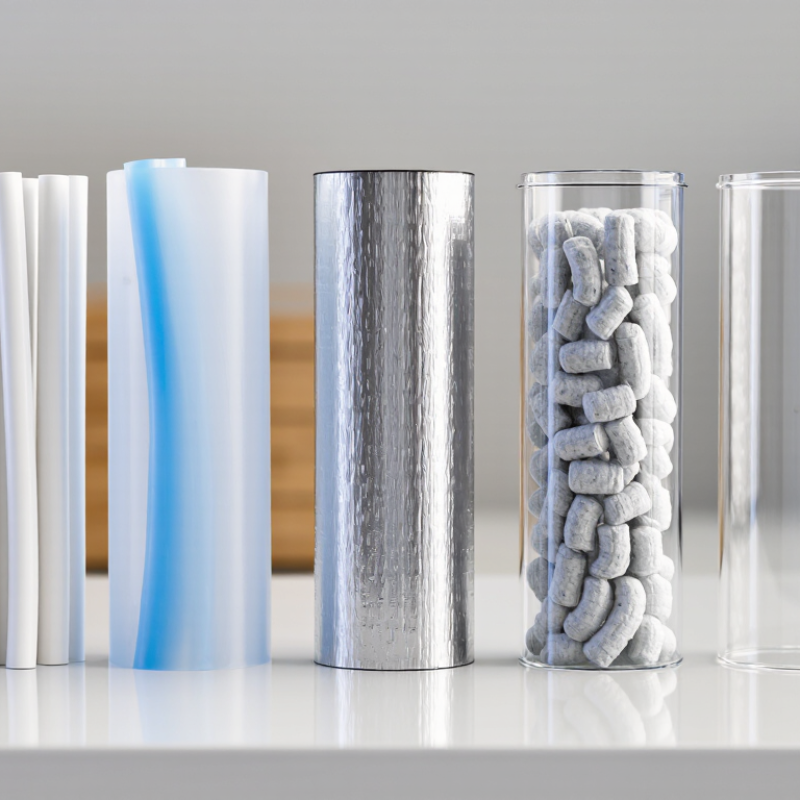
Coex tubes are multilayer packages made by extruding several polymers together. Each layer serves a specific function. The inner layer protects the formula, while the outer layer supports printing, handling, and shelf appeal.
A thin barrier layer can reduce oxygen, moisture, or aroma transfer. This matters for creams, gels, pastes, and other sensitive products.
Global buyers use coex tubes because they balance protection, cost, and production efficiency. Different resin combinations can support demanding filling lines and varied climates. Smithers’ 2024 packaging analysis identifies barrier performance and lightweighting as major development priorities. The OECD Global Plastics Outlook reports that the world generated 353 million tonnes of plastic waste in 2019, with only 9% recycled. That data makes material selection more serious.
A coex tube is not automatically sustainable. Its recycling pathway depends on layer chemistry, local systems, and package design. I have seen specifications look efficient on paper, yet fail during compression tests or hot storage.
Tips: Ask for the full layer structure, not only the total thickness. Confirm barrier data, seal strength, migration testing, and compatibility with the formula. Request samples after filling and aging. Small tests reveal large problems.
Buyers should also check whether the tube supports existing recycling guidance in target markets. UNEP’s 2023 report says plastic pollution could be reduced by 80% by 2040 through system-wide changes. Coex design can contribute, but only when engineering decisions match real collection infrastructure. That part is often overlooked.

In 2026, global buyers will compare coex tubes by structure, not appearance alone. A glossy surface can hide weak oxygen protection. Real performance starts with the product formula, filling process, and storage climate.
A common five-layer design uses an outer polyethylene layer, tie layers, and an EVOH barrier. The inner layer supports sealing and product contact. For moisture-sensitive formulas, polyolefin selection and wall thickness need careful testing. Aluminum foil provides strong light and gas protection, but it reduces flexibility and complicates recycling. Seven-layer structures can separate functions more precisely, including stiffness, adhesion, barrier performance, and sealing. More layers do not automatically mean better protection.
Barrier choices are rarely perfect. An EVOH layer may perform well in dry conditions, yet humidity can reduce its efficiency. A thicker wall may improve protection while increasing material use and squeezing force. Designers should measure oxygen transmission, water vapor transmission, seal strength, drop resistance, and torque behavior. Tests should use filled tubes, not empty samples. Heat, humidity, and repeated opening can change results. One overlooked detail: the shoulder must match the barrier layout. An excellent film structure can still fail at the shoulder or cap seal. That gap deserves attention. Buyers should request technical data, migration documentation, compatibility results, destination-market compliance records, and production samples. Supplier claims are useful, but independent verification remains wiser.
The chart compares representative 300 µm coextruded tube-wall designs. Standard PE structures provide basic moisture and chemical resistance, while EVOH is added as an oxygen and aroma barrier. Tie layers improve adhesion between chemically different polymers. Actual layer thicknesses depend on product formulation, filling process, shelf-life target, and regulatory requirements.
Data shown are representative engineering constructions for comparison and do not represent any company or brand.
2026 Top Coex Tube Types for Global Buyers: Which Coex Tube Types Suit Different Product Categories?
Choosing a coex tube starts with the product, not the appearance. Cosmetic creams usually suit three-layer PE tubes with a smooth inner layer and printable outer surface. They offer practical flexibility, clean dispensing, and reliable sealing. For oxygen-sensitive serums, five-layer tubes with an EVOH barrier can reduce exposure during storage. This structure is useful when active ingredients may lose performance over time.
Toothpaste often needs strong dimensional recovery and resistance to abrasive formulas. Five-layer PE tubes can provide better barrier performance and controlled squeezing. For food pastes, compatible barrier layers help protect flavor and reduce odor transfer. However, food-contact requirements differ by market, so material declarations and migration tests should be checked carefully. A tube that performs well in one region may need changes elsewhere.
Pharmaceutical ointments demand tighter control. Multi-layer tubes with aluminum or high-barrier polymer layers can support protection from light, moisture, and oxygen. The closure and shoulder also matter. Small leakage can undermine an otherwise excellent tube. Recycled-content layers may attract sustainability-focused buyers, but they can affect color, odor, and consistency. This is where assumptions become risky. Real filling trials, compatibility testing, and aging studies reveal problems that product sheets often miss. Tubes should be judged after filling, transport, and repeated consumer use—not only when they look perfect on a sample table.
Comparative guide to common coextruded tube structures, their barrier performance, material characteristics, and recommended product applications.
| Coex Tube Type | Typical Structure | Best-Suited Product Categories | Oxygen Barrier | Moisture Barrier | Key Advantages | Buyer Considerations |
|---|---|---|---|---|---|---|
| Standard PE Coex Tube | PE / PE or PE / recycled PE / PE | Shampoo, shower gel, body wash, hand soap, basic creams and lotions | Low to medium | High | Good squeeze recovery, broad chemical compatibility, economical processing, and strong moisture resistance | Not the preferred option for oxygen-sensitive formulas, essential-oil-rich products, or long shelf-life products requiring strong aroma retention |
| EVOH Barrier PE Tube | PE / tie layer / EVOH / tie layer / PE | Natural cosmetics, active skincare, oxygen-sensitive creams, serums, gels, and selected pharmaceutical topicals | Very high | High | Excellent oxygen and aroma protection while maintaining PE-like flexibility and appearance | EVOH performance decreases at high humidity; the formula, closure, wall thickness, and barrier design must be evaluated together |
| High-Barrier Multi-Layer PE Tube | PE / tie layers / EVOH or PA / tie layers / PE | Premium skincare, anti-aging creams, whitening products, color cosmetics, and sensitive active formulations | Very high | High | Enhanced protection against oxygen, volatile ingredients, and external contamination; suitable for extended shelf-life targets | Higher material and processing cost; compatibility testing is important for formulas containing alcohol, acids, solvents, or high levels of fragrance |
| PE Tube with PCR Middle Layer | Virgin PE / post-consumer recycled PE / virgin PE | Mass-market personal care, hair care, bath products, and everyday household gels | Low to medium | High | Can reduce the use of virgin resin while preserving a clean external surface and familiar PE processing behavior | Color variation, odor, regulatory acceptance, and PCR content consistency should be verified for each market and product category |
| Recyclability-Oriented PE Coex Tube | PE / PE functional layer / PE, with limited non-PE components | Shampoo, conditioner, body care, facial cleansers, and brands prioritizing PE-stream compatibility | Low to medium | High | Designed to simplify material identification and support compatibility with PE recycling systems where accepted | Barrier performance may be lower than EVOH structures; recyclability claims depend on local design guidelines, collection, and sorting infrastructure |
| PP Coex Tube | PP / PP or PP / functional PP layer / PP | Hair styling products, creams requiring higher temperature resistance, selected medical and cosmetic applications | Low to medium | High | Higher stiffness and heat resistance than conventional PE; good surface gloss and dimensional stability | Generally feels less flexible than PE; formula compatibility, sealing conditions, and consumer squeeze preference must be assessed |
| PP / EVOH / PP Barrier Tube | PP / tie layer / EVOH / tie layer / PP | High-value skincare, medicated creams, oxygen-sensitive treatments, and products requiring a stiffer premium pack | Very high | High | Combines strong oxygen protection with PP stiffness, heat resistance, and a high-quality surface appearance | Usually requires more specialized processing and may have a higher minimum order quantity than standard PE tubes |
| Chemical-Resistance PE Coex Tube | HDPE or modified PE outer layer / compatible barrier or tie layers / LDPE inner layer | Toothpaste, cleaning gels, exfoliating products, products with salts, and formulas with challenging active ingredients | Medium | High | Can be engineered for improved resistance to stress cracking, aggressive ingredients, and repeated squeezing | Exact resin selection depends on pH, alcohol, surfactant, oil, salt, and active-ingredient concentration; accelerated compatibility testing is recommended |
| Low-Carbon PE Coex Tube | PE / certified mass-balance or bio-based PE layer / PE | Personal care and cosmetic products with lower-carbon packaging objectives | Low to medium | High | Can support carbon-reduction strategies without substantially changing the tube’s conventional PE processing route | Environmental documentation, chain-of-custody certificates, allocation method, and regional claim requirements should be checked before purchase |
Note: Barrier ratings are comparative indications for the listed structures, not guaranteed test results. Actual performance depends on layer thickness, resin grade, tube diameter, closure design, filling conditions, formula composition, storage temperature, and required shelf life. Buyers should request oxygen transmission rate, water vapor transmission rate, compatibility, seal integrity, and migration test data for the final specification.
For global buyers, the best coex tube is not always the cheapest one. It must protect the formula, run smoothly on filling lines, and meet changing sustainability targets.
Two-layer polyethylene tubes suit many lotions, gels, and everyday products. They offer lower material costs and simpler recycling potential.
Five-layer structures can add EVOH or other barrier layers. These tubes better resist oxygen, moisture, and aroma loss. The trade-off is higher cost and more complex recycling.
Testing matters. A tube that survives a 12-month shelf-life test may still fail after repeated squeezing.
The OECD Global Plastics Outlook reports that only 9% of plastic waste was recycled globally in 2019. The 2024 Circularity Gap Report places global circularity at 7.2%. These figures make material selection more important, not merely fashionable. PCR content can reduce virgin resin use, but it may affect color, odor, sealing, and consistency. Some buyers overestimate its benefit. Lower plastic weight can also weaken shoulder strength.
Tips: Compare barrier performance, wall thickness, PCR percentage, and actual line-speed results. Request migration, compression, drop, and aging tests. Review the complete tube, including cap and decoration. A recyclable body may lose that advantage when mixed materials remain attached. Cost models should include rejects, transport, and end-of-life requirements. Supplier claims deserve verification.
Global buyers should inspect more than appearance before selecting coex tubes. The OECD Global Plastics Outlook reports that global plastic waste reached 353 million tonnes in 2019. Packaging created about 40% of that waste. This figure makes material efficiency and recyclability practical purchasing concerns, not marketing language.
Start with the product’s barrier requirement. Three-layer PE tubes suit many creams and gels, while five-layer structures can add EVOH for stronger oxygen protection. Ask for oxygen transmission, water vapor transmission, seal strength, and migration test results. Request production samples, not only laboratory sheets. A tube may perform well on paper but wrinkle near the shoulder during filling. That mistake is easy to miss.
Check compatibility between the barrier layer, closure, shoulder, and filling line. ASTM D4169 testing can help evaluate transport risks, including vibration and compression. Also verify wall thickness, printing adhesion, torque range, and leakage rates from actual batches. The Sustainable Packaging Coalition’s 2024 guidance emphasizes clear material identification and recovery conditions, yet recycling access differs sharply by country. A technically recyclable tube may still lack a realistic collection route. Buyers should therefore request resin details, recycled-content evidence, and country-specific end-of-life data. Cheap samples can hide expensive failures.